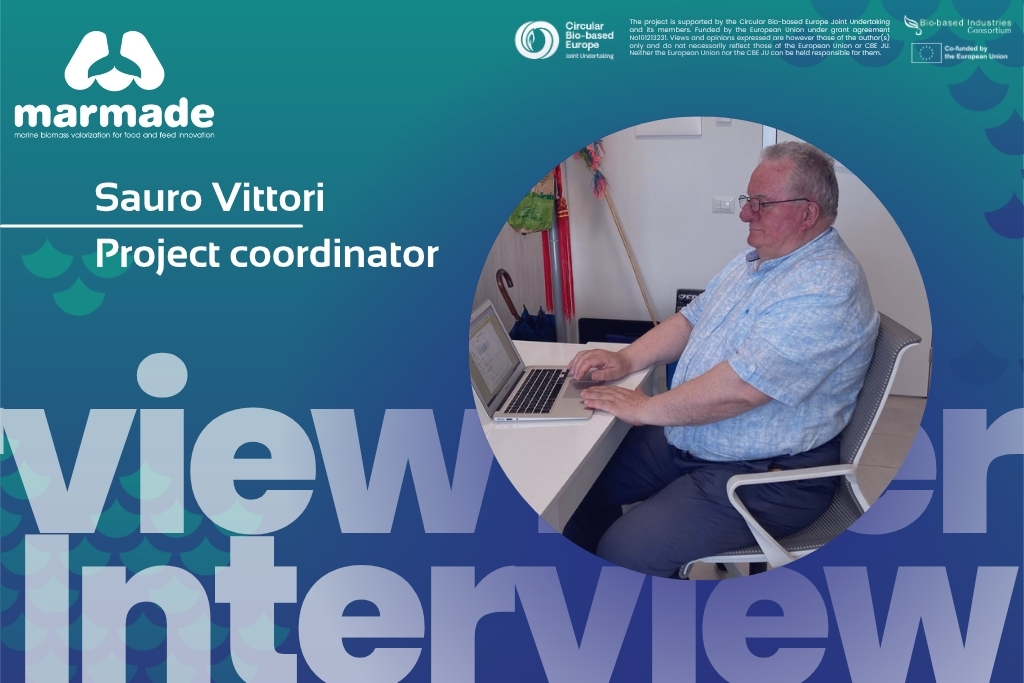
Sauro Vittori
Behind MARMADE lies a clear vision: to rethink how marine resources are perceived, used, and transformed within more sustainable food systems.
For Professor Sauro Vittori, the creation of MARMADE was inspired by the growing need to manage resources in a smarter, more sustainable, and more innovative way, with a particular focus on the untapped potential of marine biomass.
“MARMADE was inspired by the idea that marine wastes should no longer be considered as such, but as valuable resources for creating sustainable and innovative solutions.” Professor Vittori explains.
At the heart of the project is the ambition to foster a circular food system by combining scientific research, technological innovation, and stakeholder collaboration. Through this approach, MARMADE aims to transform marine biomass into high-value products that can deliver environmental, economic, and social benefits.
A key element of this vision is the development of a “zero residue” process, ensuring that marine resources are used efficiently and responsibly throughout the entire value chain.
The sustainable valorisation of marine biomass is particularly important for Europe today, as it supports the transition toward a circular and resource-efficient bioeconomy. Marine biomass, including algae and seafood processing wastes, remains an underexploited resource with strong potential for the development of food ingredients, bioactive compounds, and other high-value products.
“Its valorisation can reduce waste, lower environmental impacts, strengthen food system resilience, and decrease dependence on non-renewable resources.” Professor Vittori notes.
Beyond its environmental dimension, the project also highlights the economic opportunities that marine biomass can create, especially for coastal regions, while contributing to European sustainability and climate goals.
Looking ahead, MARMADE aims to contribute to a more sustainable and circular blue bioeconomy by demonstrating how marine biomass can be effectively transformed into valuable products and solutions.
“We hope the project will inspire new industrial practices, strengthen collaboration between research institutions and stakeholders, support the development of standardized protocols, and encourage policies that promote sustainable resource use.” Professor Vittori says.
Through its work, MARMADE also seeks to raise awareness of the potential of marine biomass, helping reduce waste, improve resource efficiency, and generate long-term environmental, social, and economic benefits across European food and bio-based sectors.
By bringing together research, innovation, and collaboration, MARMADE continues building the foundations for a more sustainable and circular future for marine-based resources.