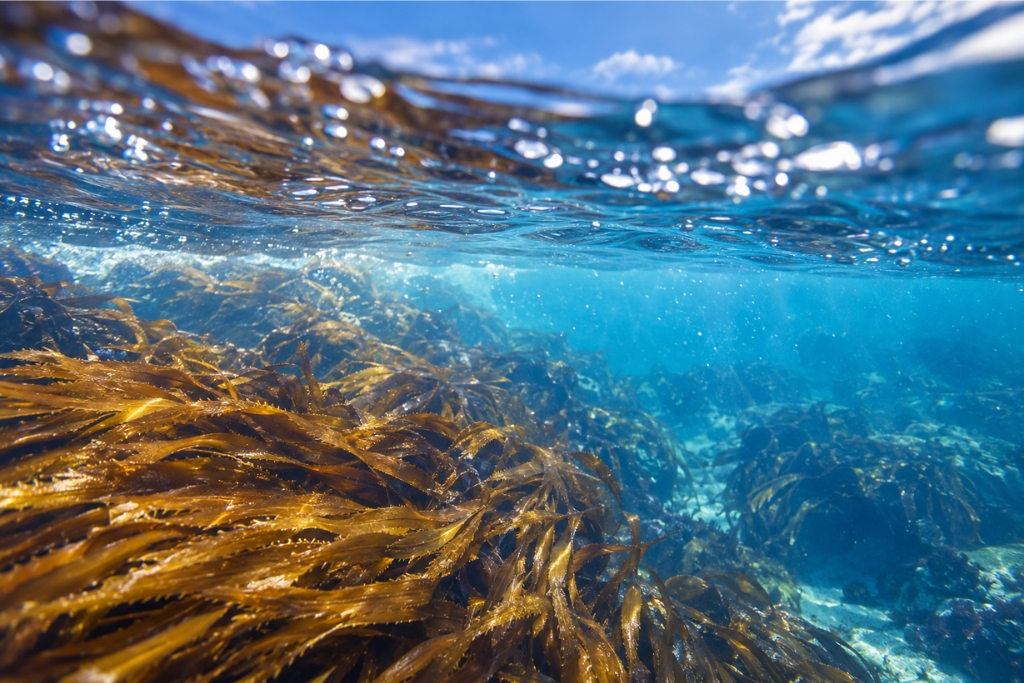
Europe has significant macroalgae resources, but building new value chains around them depends on identifying biomass sources that are not only available, but also reliable and scalable.
New mapping carried out within MARMADE by CTAQUA, together with BIOCHICA and ALGAE SCOPE, is helping provide a clearer picture of macroalgae production across Europe. The work was recently featured by misPeces, highlighting both the opportunities offered by Europe’s marine biomass resources and some of the challenges that need to be addressed before they can support emerging value chains.
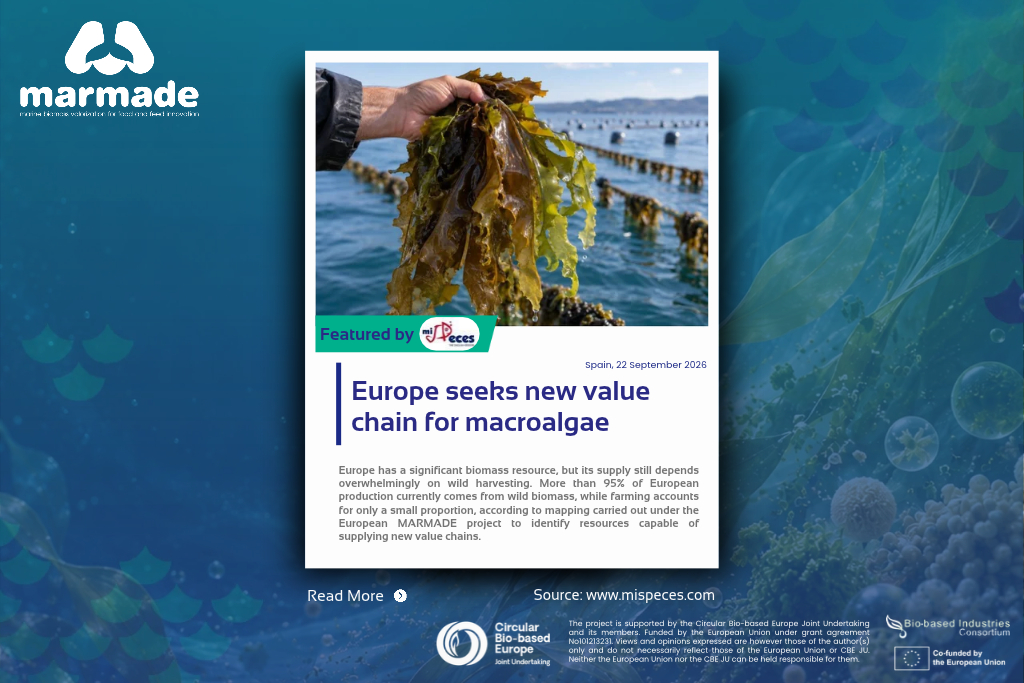
According to the analysis, more than 95% of European macroalgae production currently comes from wild-harvested biomass, while farming accounts for only a small proportion. Norway is identified as Europe’s leading producer, representing more than half of total volumes, followed by France, Ireland and Iceland.
Brown seaweeds dominate production, particularly species from the Laminaria and Ascophyllum genera, together with Saccharina latissima. The mapping also covers red seaweeds such as Palmaria palmata, Gelidium and Gracilaria, as well as green seaweeds including Codium and Ulva species.
Importantly, the work looks beyond production volumes alone. The potential of biomass to support industrial value chains also depends on where it is located, how it is obtained and where processing takes place. Production and processing may, for example, be geographically separated, as seen in flows of red seaweed from Morocco supplying European agar-processing facilities.
The mapping also considers biomass outside conventional production chains. This includes the invasive species Rugulopteryx okamurae, which has accumulated in substantial quantities around the Iberian Peninsula, particularly in the Strait of Gibraltar, as well as green algae associated with aquaculture facilities.
These insights will support MARMADE in identifying promising raw material sources for the next stages of the project. A key challenge will be determining whether these resources can provide a sufficiently concentrated, reliable and scalable supply to support the development of circular value chains for higher-value food and feed ingredients.
Read the full article on misPeces to learn more about Europe’s macroalgae resources, their potential and the challenges involved in bringing emerging marine biomass value chains closer to industrial application.